
Analyzing Variance and Volatility in Progressive Slots
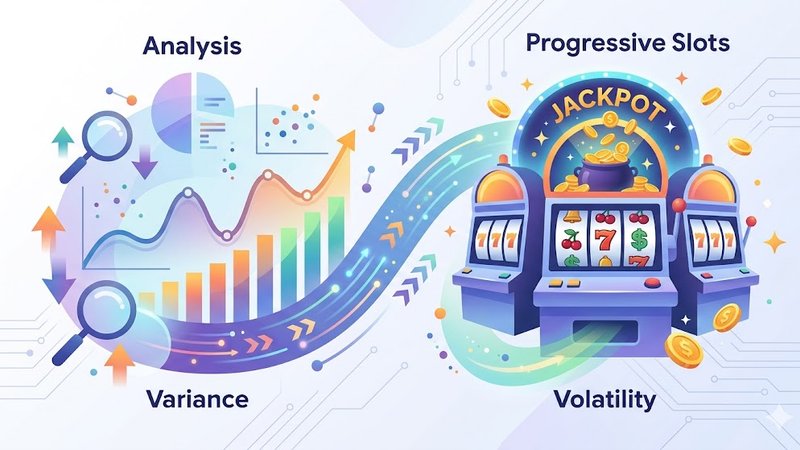
In the realm of high-stakes slot tournament analysis, understanding the relationship between volatility and variance is essential. While these terms are often used interchangeably, they describe different aspects of the gaming experience and how they may affect your bankroll over time.
Volatility vs. Variance: The Distinction
Based on our review, we define these concepts as follows:
- Volatility: This refers to how often a game pays out and how large those payouts tend to be. High-volatility slots, typical of progressive jackpots, may have long periods of no wins, followed by a significant payout.
- Variance: This is a mathematical measure of how much the actual results deviate from the expected average (the RTP). High variance means the swings in your balance could be more extreme.
Disclaimer: We must be clear that there are no winning strategies for slots. Every spin is determined by a Random Number Generator (RNG), and no amount of analysis can provide a potential win.
For a professional player, managing high variance requires a larger bankroll. If a game has a high degree of variance, you could potentially go through hundreds of spins without a meaningful hit. In our opinion, attempting to chase a progressive jackpot with a small balance is likely to result in a rapid loss of funds.
Responsible Gambling: Because of the high volatility associated with progressive slots, it is vital to set a strict budget. Never gamble more than you can afford to lose, and remember that the house always maintains a mathematical edge.
When analyzing a slot for a tournament, we suggest looking at the 'hit frequency.' A game with a low hit frequency but a massive jackpot is the definition of high volatility. Conversely, a game that pays small amounts frequently but has a smaller top prize is considered low volatility. Depending on your goals, one may be more appealing than the other, but neither changes the long-term RTP.
Some players believe that a slot is 'due' for a payout if the jackpot hasn't hit in a long time. Based on our methodology, this is a misconception known as the Gambler's Fallacy. Each spin is an independent event; the probability of the jackpot hitting on the next spin remains the same regardless of how long it has been since the last win.
In our opinion, the best approach for those analyzing these games is to focus on the 'volatility index' if provided by the developer. This may help in selecting a game that aligns with your risk tolerance. By understanding that variance is a natural part of the process, players may avoid the emotional pitfalls of a losing streak.